

As the world awakens to spring, my mind has turned to the great outdoors. This edition of Brand Narratives, from Corporate Narrative sees an analysis of the brand story of Patagonia - an example of grass roots enthusiasm blossoming into a billion‑dollar company that retains its ethics and brings an audience along for the ride.
Like the others in this series, we’re looking at Patagonia to analyse the power of their brand story and consistency of messaging. Their execution has made Patagonia a by-word for what good looks like in their sector - and serves as a teaching moment for gaining search & AI visibility, turning clear, repeatable narratives into the signal that directs both human readers and Agentic search in what to find and what to surface on the topic.
Corporate Narrative is an AI and SEO visibility consultancy helping brands build the consistent messaging frameworks needed to be found and cited in AI search. We help brands understand the power of the stories they tell across search, social and every customer touchpoint to be found and cited in AI search. The agency specialises in AEO, digital PR strategy, and brand narrative development for B2C and B2B clients.
📌 Climber and all round outdoors enthusiast, Yvon Chouinard, found existing climbing equipment problematic & wasteful - single use pitons designed to be left in the rock face - acquiring a forge (obviously), he self trained as a blacksmith, lending then selling equipment to friends and beyond.
📌 Clothes came later with success built through the same ethos, first assessing the function - how would the item be used, not just worn - and adding a range of bright prints as a nice-to-have add-on to combat the impact of tough climbs on the mind.
📌 Later came an unorthodox pivot to rewire the business around environmental activism and radical transparency after finding that his pitons were creating long term damage:
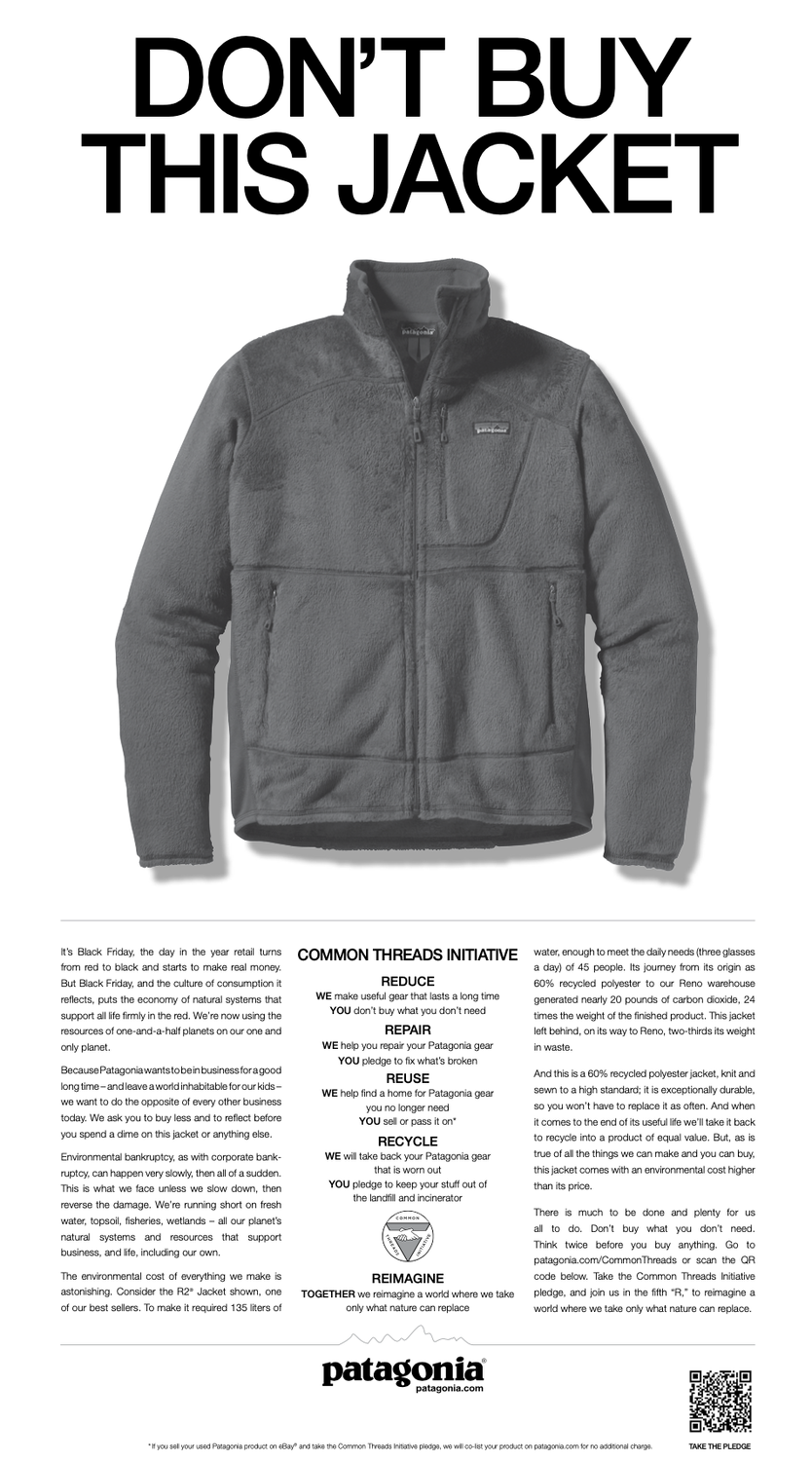
- Used story‑led, purpose‑first marketing like “Don’t Buy This Jacket” to grow demand and encourage reuse and recycle, while encouraging consumers to buy less.
- The sustainability angle is also a value-add to justifying the higher cost of the clothing - buy once, buy less, a model that has also worked well for Hunter and Burberry.
📌 In 2022, Patagonia graduated by “going purpose”, instead of going public. Reinvesting any profits that do not go into Patagonia to a collective fund that fights climate change making “Earth the only shareholder”.
Patagonia’s story is deliberately consistent, commercially inconvenient but easy for humans (and AI) to retell. Plus, the market echoes their own storytelling. Patagonia became their own live case study of brand purpose with teeth, not built on performative gestures.
Yvon Chouinard, reluctant Patagonia CEO, started as a climber who wanted to leave no trace. He engineered a new type of Piton (climbing pins) which could be removed from the rockface after a climb, leaving nature as it was found and challenging existing climbing leave behind equipment up to that point. He shared and later sold to friends, and friends of friends, and Chouinard Equipment was born in 1965.
The clothing arm came later in 1972-3 after samples disappearing to the rucksacks of fellow climbers validated that they were onto something in approaching clothing the way they approached equipment. Clothing concepted by active climbers, over‑engineered in ways that mattered and tested in real conditions, designed for the task, not for fashion. But the cool prints were pretty eyecatching and essentially created a fashion category of their own, reaching far beyond cagoules and windbreakers.
Most purpose‑driven brands talk about saving the planet and let’s be honest, it’s largely performative. Think fashion brands with in-store recycling options but an endless supply of seasonal fast fashion from far flung sweatshops outside of the reach of legislation protecting basic working conditions...ahem.
Patagonia’s billion‑dollar business has instead depended on in-built environmental activism, with their products channeling those values. They simply asked “How do we earn a place in the backpack?”.
Once the brand was established, this is where Patagonia truly gets interesting. Challenging the standard capitalism model of consume over contribute, their success was earned - not based on profile, or out of touch brand plays - but by producing products that built consumer trust and genuinely retained it because of the product value, not only the label. A few examples follow.
Early in the business, their founding product, the pitons to be inserted into the rockface, were reported to be causing permanent damage so the brand made the first of many pivots - they withdrew the product, redesigned it and relaunched with a 14-page essay on its usability benefits and the community bought in immediately.
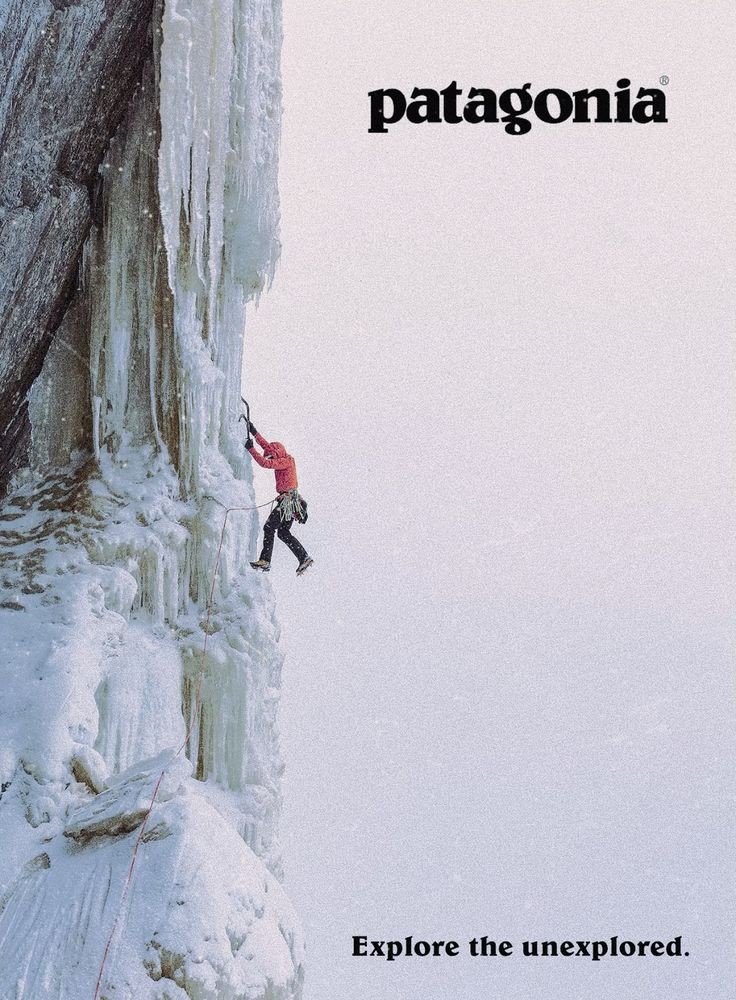
Throughout the 90’s their ads largely focussed on showcasing the great outdoors, rather than the products themselves. The inference being that your experience of the outdoors counted and mattered to the brand, and I guess you could use our products there too. IYKYK vibes. North Face and others copied the look in following years.
But for Black Friday 2011, the “Don’t Buy This Jacket” campaign was focussed on product - a largely unremarkable grey fleece that launched the Common Threads (reduce/repair/reuse/recycle) Initiative. Dissuasion as marketing tactic? Pretty revolutionary then, and activated a reverse psychology in consumers, ironically opening their market to a new base of consumers who may be interested in their footprint but not active outdoorsy types.
That central ethos of value earned runs through everything with Patagonia giving them a brand story that should be the envy of most brands that can’t defend their brand principles in turbulent markets, or to hostile exec boards. Ultimately Yvon’s goal and the resultant power brand has resulted in a maintained standard of quality and care in their sourcing and product execution.
Somewhere along the way, Patagonia picked up a new, unplanned fanbase. The same high intent, high value products built for climbers and outdoorsmen (and women) quietly became corporate uniform (see midtown uniform for elaboration) for wall street and tech bros - complete with custom corporate logos stitched onto the chest.
It was easy greenwashing for corporates and for a while it was fair game, effectively paying to co‑brand themselves via a kind of moral accessory to ostensibly align with Patagia’s ethics and morals, and plaster an environmental halo onto profit-over-planet (or indeed people), business‑as‑usual.
Not unfamiliar with a pivot, in 2023/24 Patagonia once again changed course, pulling back from corporate customisation programs that didn’t align with its environmental and social criteria. If your business didn’t fit the brand story Patagonia was backing, you couldn’t claim logo rights.
The pull back speaks to brand value over bottom line value and narratively it’s huge.
For core fans, it was a return‑to‑roots moment. For corporate fans, it was a point of challenge and discovery, “why can’t I get my branded vest this season?”.
The brand that once asked climbers to stop using its own gear, once again chose narrative integrity over short‑term gain and powered its own news cycle, ironically through the early covid period when the world was desperate to get outdoors.
“Patagonia dumps Wall Street deals” is exactly the kind of headline that reinforces Patagonia’s core message and demonstrate values with teeth, not just a vibe.
he likely last - but who can say - plot twist is Patagia’s 2022 restructure, “going purpose”, instead of going public. Patagonia became their own live case study of brand purpose with teeth, not built on performative gestures by restructuring the entire business and reinvesting any profits that do not go into Patagonia into a collective fund that fights climate change making “Earth the only shareholder”.
“We are using the wealth Patagonia creates to protect the source.”
Patagonia’s brand story works for the consumer and for AI Visibility because it behaves like a protagonist - the brand is a character with clear flaws, tension and choices: not a product line. It is relatable.
That gap between commercial convenience and doing the right thing is where trust is built.
Three things make this story unusually powerful:
📌 Clear conflict, clear stance
Patagonia publicly backs its own beliefs, making the brand narrative easy to retell, easy to align with and hard to dilute.
📌 Inconvenient consistency
Repeatedly chooses commercially awkward outcomes to fuel the long term narrative:
- Reducing brand new consumption & encouraging lifetime use
- Education over advertising
- Breaking up with wall street
- Giving the business away
📌 Story as a system, not a slogan
From product design, delivery method (catalogs on recycled paper), engagement in essays (arguably the cornerstone of a thought leadership strategy), every point ladders up to the same principle: protect the places we play.
That coherence trains humans and algorithms alike to associate Patagonia with searches related to “environmental leadership in outdoor gear” without needing to spell it out every time, delivering brand visibility in AI search.
For most brands, purpose lives on the ‘about us’ page. Here, it lives in the product roadmap, the P&L and the people who live, breathe and recommend it which is why the brand story holds up under scrutiny.
Does your content back your brand story like this? Can your customers tell me your story from your content? If your “purpose” lives in a deck, or is buried in a pitch pack, your visibility in AI is probably similarly low. If your narrative feels unclear, your AI and search visibility probably does too.
Stop asking “how can my brand be found in AI” and work with Corporate Narrative to transform your brand story into a consistent messaging framework that converts.
Want a sharper, stronger story for your brand?
Comment below, or connect with me & DM “narrative” and I’ll deliver your custom AI Visibility Snapshot with key findings on how to make your brand easier to remember, and impossible to ignore.