
In this newsletter, Brand Narratives, expect analysis on how standhout companies translate their identity into influence, commercial impact and AI & SEO visibility.
The content plan took a predictable turn for April. Easter = chocolate (but yes, Easter holiday + client work load means we are publishing in very early May). Who hasn’t almost broken a tooth or mistakenly mispronounced a Tony’s Chocolonely product this season (or any season). A product as chunky as their brand story, it’s the focus of the next Brand Narratives newsletter.
You'll also find a new section in Brand Narratives focussed on how to apply these brand authority lessons to your brand or business to be found and stay known in AI visibility. Scroll now...
Corporate Narrative is an AI and SEO visibility consultancy helping brands build the consistent messaging frameworks needed to be found and cited in AI search. We help brands understand the power of the stories they tell across search, social and every customer touchpoint to be found and cited in AI search. The agency specialises in AEO, digital PR strategy, and brand narrative development for B2C and B2B clients.
📌 The name Tony’s is an anglicanisation of ‘Teun’, for the Founder, Teun Van de Keuken with Lonely referring to his feeling of isolation in his quest to drive chocolate supply chain change.
📌 Formally founded in 2005 by Teun Van de Keuken, an investigative journalist covering exploitation in the cocoa supply chain. Uncovering the lack of progress by big brands in tackling child slavery in the cocoa market following a 2001 pledge to do so, he and others decided to become change makers.
📌 Prior to founding the brand, Teun and friends were familiar in courting controversy in the pursuit of change. Frustrated by the lack of concern & progress, Teun used guerilla tactics & tried to sue himself for being complicit in the crimes perpetrated in the production of chocolate, even bringing an enslaved child to testify against him. The case (unsurprisingly) did not progress, but the mission did.
📌 Tony’s uneven moulding is representative of the inequality in the wider production process of chocolate, and have pledged to maintain their uneven moulding until there is guaranteed equality in the supply chain.
📌 In 2019, Tony’s Chocolonely launched the Open Chain initiative, encouraging other chocolate manufacturers to embrace transparent cocoa sourcing, aiming to be "100% slave free.”
Tony's Chocolonely perfectly demonstrates that mission-led brands with a consistent, multi-format narrative earn brand authority in search, social, and AI discovery, over their big brand, product-led competitors. Yes we all know Cadbury’s and Lindt as brand houses, but do you know what they stand for? No. And their likely single page of ‘sustainability’ content doesn’t tell that story for AI visibility or consumer attention either.
Formally founded in 2005 by Teun Van de Keuken, an investigative journalist covering exploitation in the cocoa supply chain. Almost unbelievably, it turns out that lots of promises had been made by high revenue cocoa brands to address child slavery in the cocoa market in 2001...yet, curiously as big brand profits continued to rise, change failed to happen. After reporting on this and finding themselves uneasy with the lack of any positive outcome, Teun and a band of fellow equality enthusiasts campaigned for a few years to try and bring change about.
They gained decent coverage early on, creating strong brand authority signals which included Teun's attempt to sue himself as complicit in the crimes perpetrated in the production of chocolate after eating chocolate as part of an interview. So much coverage, but not much movement. He and others determined that a chocolate product that did what they said was possible could deliver more of an impact and in launching the Tony's product, they became change makers and gained entity recognition.
Teun was not a product guy, he was a journalist. Many of the things that are so relatably Tony's would not have been choices made by existing confectionary category leaders. From the un-dividable bars to the overt mission messaging on the packaging. Each element doubles down on brand campaigns, gaining ever greater topical authority in retelling the story in new mediums:
The "Unfair" Trial - Teun's legal stunt above
Un-dividable Bars: The uneven snap of a Tony's bar that references the inequality in the production process.
Advent Calendar Stunt: The release of an advent calendar with one empty window referencing the inequality they seek to tackle in the cocoa supply chain.
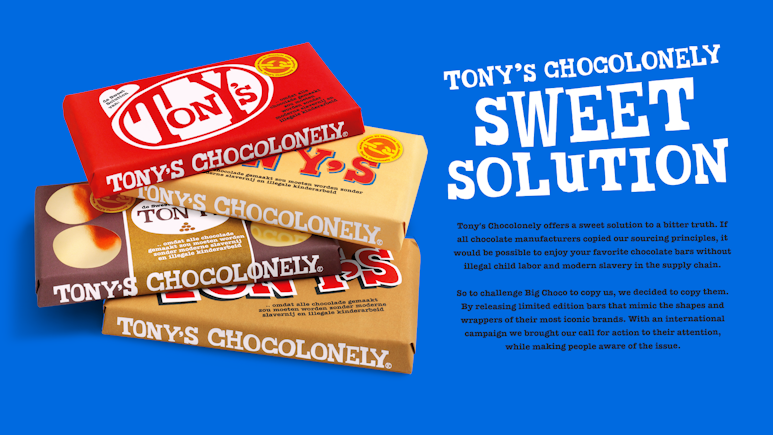
"Sweet Solution" Bars: Tony’s, but make them dupes of big brands. Calling out unethical sourcing practices in the industry, specifically calling out bigger players' lack of action on illegal child labor.
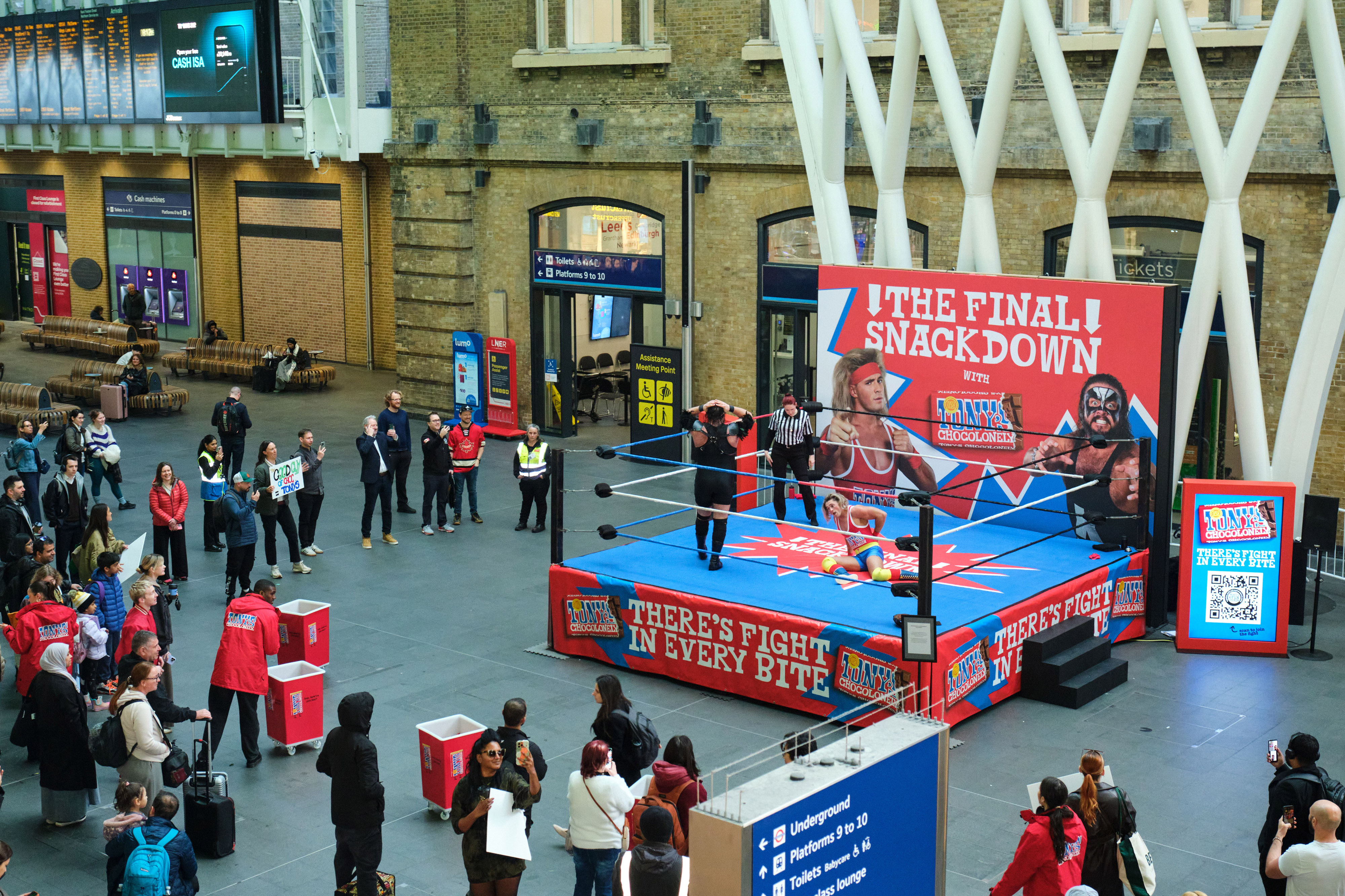
"There's Fight In Every Bite": A physical activation in London's Kings Cross supporting an associated TV campaign.
Each of these iconic choices were influenced by the brand message - and it all relies on storytelling. That is the big takeaway in this brand narrative - that PR and consistent messaging drives topical authority, and influences both your physical consumer and our AI content overlords.
Outside of the big stunts, Tony’s also produces co-authored research reports into the cost of living and other key areas of impact that support their mission - co-authors/partners include longer standing ethical brands like Fairtrade and regularly update their list of Open Chain Sustainability partners.
These are nice examples of digital PR tactics that act as AI citation signals. By attaching the Tony’s brand to credible third-party sources, they increase the likelihood of being named in AI-generated answers on cocoa sustainability and ethical chocolate.The brand positioning sits well on the shelf - and the pocket - with comparable pricing to non ethical brands - showcasing that it is possible to use sustainable, traceable cocoa and be profitable. Which begs the question, how much profit are non-ethical producers pocketing?
Another mission first brand, Tony’s story ‘works’ because there is a why. The mission critical elements appear everywhere in the brand story with activism accessible wherever consumers meet the brand from the uneven cut of the chocolate bars, to the advent calendar stunt, to the 'snackdown' PR stunt.
They won the category by bursting onto the scene with their indignation, innovative flavour combos and eye-catching packaging. The newcomers have subsequently influenced the incumbents in the category in both design and ethics with Aldi, Ben & Jerrys and Waitrose notable Open Chain members and M&S clearly duping the Tony's packaging for their chunky pretzel bars. More notably...Nestle, Mars and Cadbury’s are not Open Chain partners.
Unusually however, it doesn’t necessarily matter if you have bought into the brand story and brand credentials on this one - just by choosing a wild flavour combo in this wrapper, you’re funding change every time you buy an Open Chain bar like Tony’s.
Does your brand story work? Run a free AI visibility audit for your brand with our AI Visibility Tool for an analysis of your competitive gaps, messaging fixes and path to greater visibility.
Run this check now - Assess your brand visibility in AI from your brand message and digital footprint.
📌 Is your message consistent?
📌 Does it ladder up to a bigger picture corporate message?
📌Is your brand message clear on every channel?
📌 Do third parties back up your story with backlinks and PR mentions?
From client surveys to social channels and website traffic data - consider all of the spaces you play in, overlay your expertise, and find the publications or websites that make sense for that content. This is the beginning of your digital PR strategy, and the key to unlocking brand authority in AI search.
The TL;DR tells a lot of the brand story on this one - not because the story is light but because it's recent, ongoing and relevant to their brand authority signals, typical authority and digital PR footprint...but why does it work?
Each Brand Narratives edition is a case study on big brands and how they gain and grow reach but if you don’t have 20-40 years to spare to build a following (in the case of Patagonia) or don’t have a physical product you can hawk (see RedBull) - what is the takeaway from Tony’s way of doing things?
The reason Tony's brand story translates well to AI visibility is structural:
Problem: They own a clear problem - resolving child slavery in cocoa
Point of View: A distinctive point of view - inequality = unequal chocolate bars
Proof: Third-party validation supports the cause - Open Chain partners, Fairtrade reports
These three elements — problem, POV, proof — are the same signals AI systems use to determine whether a brand is a credible source on a topic.
Tony’s stands out on shelf, initially because it was new and they did things differently:
Matte paper packaging - signals recyclable and sustainable, not shiny single use!
BIG capital letters font - bold, not softly, softly cursive
Wild flavour combos - focussed on consumer hook, not on cocoa % or milk/dark/white
They have continued to stand out on the shelf even as others have taken, let’s say ‘design inspiration’ from their packaging, because they became recognisable.
Is your brand purpose recognisable from the packaging? Ask someone one step removed from your offering to tell you why they would buy your product or service from first glance.
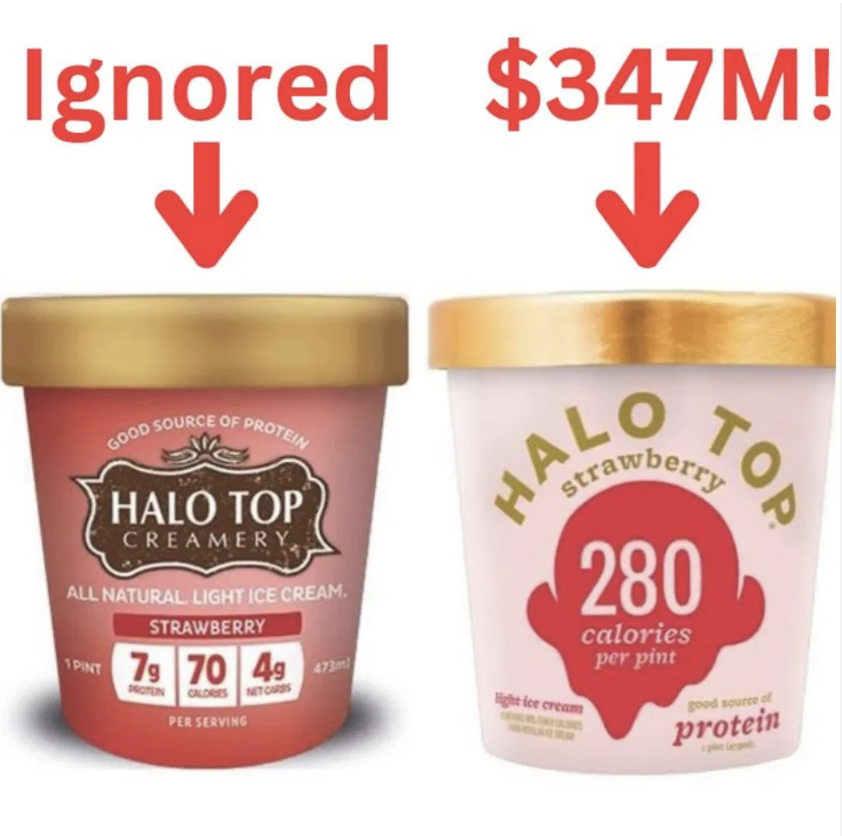
B2C: Is your packaging telling the right story for your target audience?
Look at examples like Halo Top ice cream which was unknown in its cutesy, down-home packaging until it changed positioning to focus on protein content, now a go to name in the guilt free snack category.
B2B: Are your webpages highlighting the relevant USP’s? Product pages are notoriously DULL because they often focus on what you think is important about the product, instead of how it solves your customer’s problem.
Think about your product WHY before the WHAT for search and AI visibility success. Potential customers are searching for answers to their problem - not your product features - get into the right search result by addressing their problem in your product.
Does your brand story work? Run a free AI visibility audit for your brand with our AI Visibility Tool for an analysis of your competitive gaps, messaging fixes and path to greater visibility.
As a brand, Tony’s utilise good digital PR principles (a core signal for AI discovery), partnering with Fairtrade and other well established brands to produce reports into cost of living and promoting their Open Chain sustainability program and new partners.
What does your brand mission align to?
Is there data in your space that you can collate and share, becoming the authority figure on?
From client surveys to social channels and website traffic data - consider all of the spaces you play in, overlay your expertise, and find the publications or websites that make sense for that content. This is the beginning of your digital PR strategy, and the key to unlocking brand authority in AI search.
Does your content back your brand story like Tony's? Could your customers tell me your story from your social or your webpage alone? Can't quite work out how to be found in AI, even if your brand was once the top blue link?
If your narrative feels unclear, your AI and search visibility probably does too.
Stop asking “how can my brand be found in AI” and work with Corporate Narrative to transform your brand story into a consistent messaging framework that converts.
hello@corporatenarrative.co